.gif)
 In a quiet village in Rolpa, Nepal, lives Ramesh Bahadur, a 47-year-old man who has never seen the world with his eyes. He was born as the second son in a family of seven. His parents were happy when he was born, but their joy turned to worry when they realized he was completely blind.
For Ramesh, blindness was not the hardest part of life. The real pain came from how society treated him. There were no schools for children with visual impairments in his village, and his family could not afford to send him outside the district for education. His dream of going to school ended before it began.
Life became lonely. People avoided him. He was never invited to social events. Some even believed that touching him would bring bad luck or make them lose their sight. These superstitions hurt more than his disability.
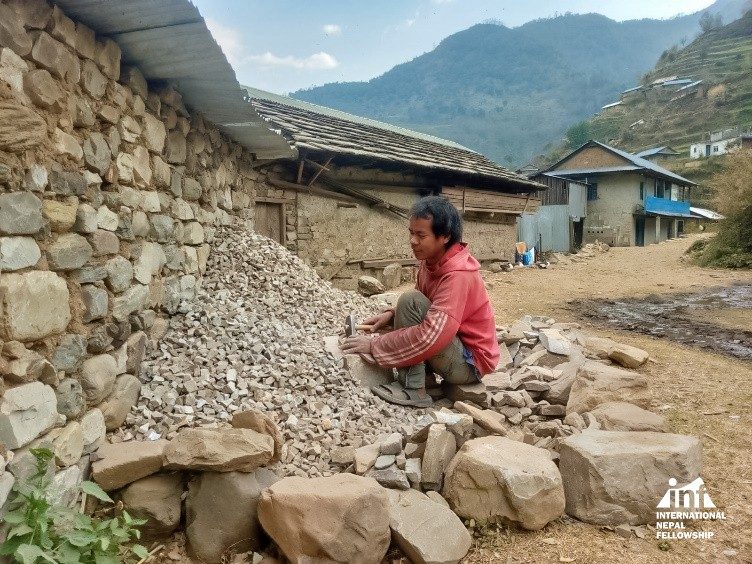
Ramesh is capable. He learned to do many things using his hands and sense of touch. But society saw him as helpless. To survive, he crushed stones for income—a hard and dangerous job that often injured his hands. It took him seven months to crush enough stones to fill two tractor loads, and even then, the market was uncertain. In six months, he earned only NPR 11,000. The government allowance of NPR 4,000 was far from enough to support his basic needs. Every day was a struggle.
People doubted his ability to lead. But Ramesh never gave up hope.
Then, everything changed. Through INF Nepal’s LIFT project, Ramesh learned that people with disabilities have rights and a voice. He joined the Bhumesthan Self-Help Group and met others who shared his struggles. For the first time, he felt included.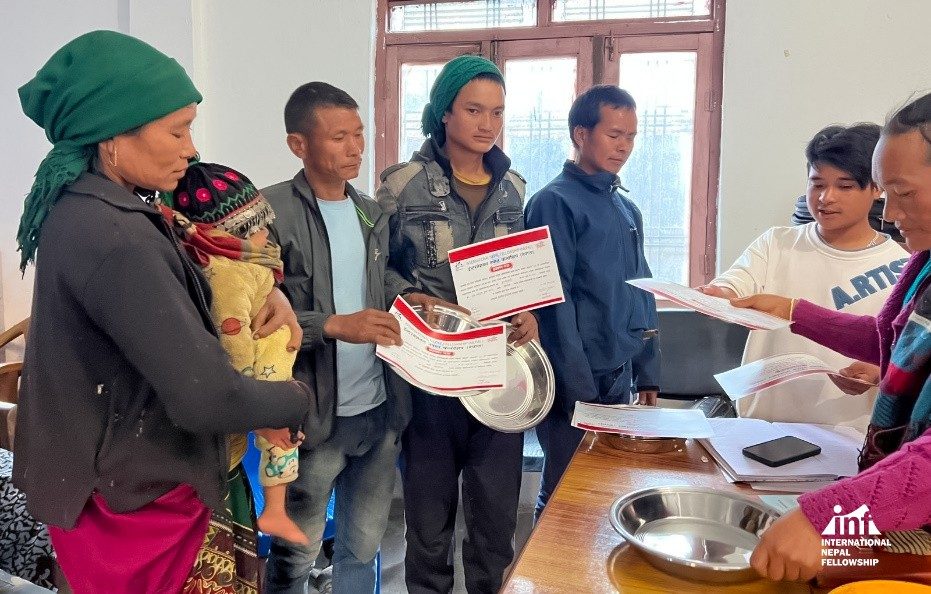
Today, Ramesh is no longer invisible. He is the Chairperson of the Disability Network in Ward No. 7. He speaks in meetings, advocates for inclusion, and has even helped secure budget allocations for disability programs in his community. “Before INF’s project, no one saw us. We were forgotten. Now, we are organizing, learning, and making progress,” he says.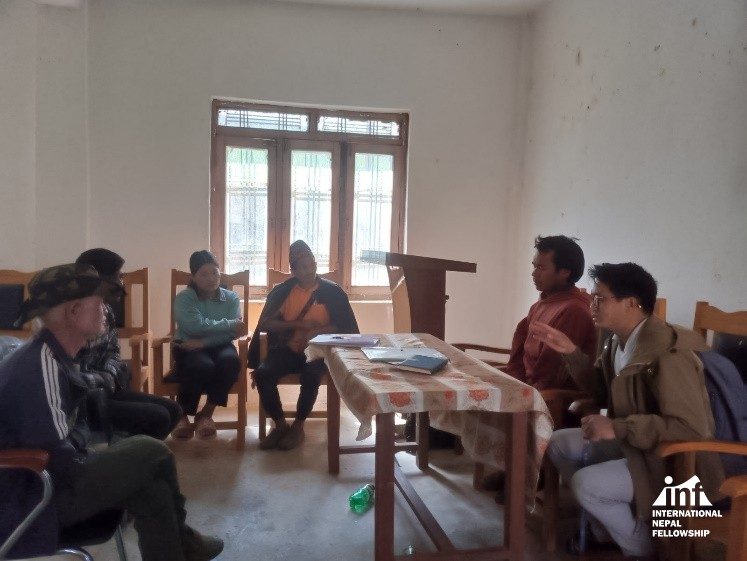
Leadership has given him confidence. He can now speak up, share his experiences, and inspire others. He has also discovered his talents—he plays the flute beautifully and dreams of joining a local musical group. Crushing stones cannot be his future; it is hard work with no guarantee of income. He has also learned handicraft skills, making hand-woven bamboo baskets, which could open new opportunities for him.
Ramesh Bahadur cannot see the world with his eyes—but he sees hope, dignity, and leadership growing inside him. His journey has just begun, and he is determined to help others rise, just as he has.
“The real blindness,” he says, “is in the eyes of those who refuse to see our strength.”