.gif)
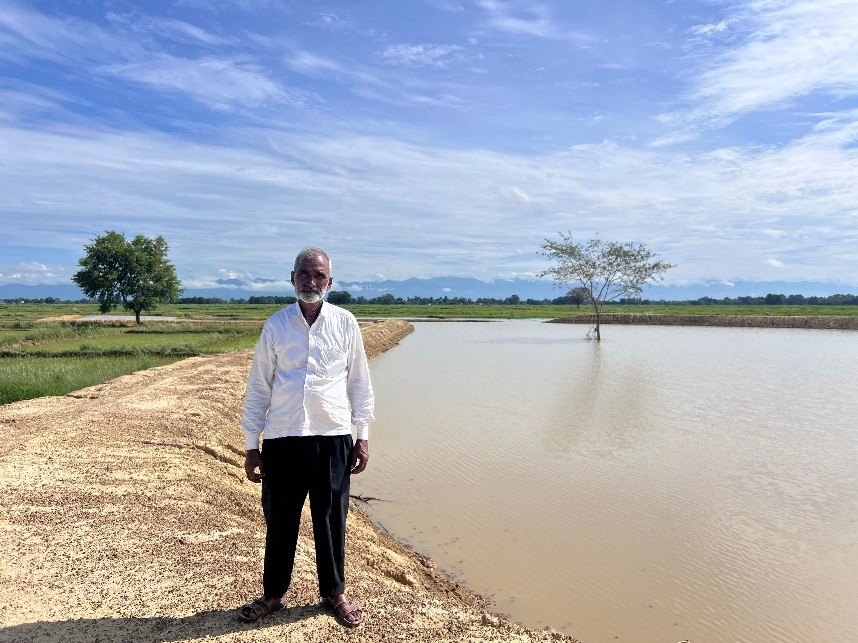
In recent years, the effects of climate change have been deeply felt in Maharajgunj Municipality of Kapilvastu District, Nepal. Prolonged droughts, drying water sources, and erratic rainfall have made water increasingly scarce. When the monsoon does arrive, it often brings sudden floods that damage crops, homes, and livelihoods leaving farming communities trapped between drought and disaster.
*Nazir Miya, a resident of Semari Village in Ward No. 9, has witnessed these changes firsthand. “Water has become seasonal,” he explains. “In the past, water was plentiful. Now, by the end of January, most sources dry up completely, and during the rainy season, we live in fear of floods.”
For years, Nazir and other farmers struggled to survive. During dry periods, underground water levels dropped so low that drilling was ineffective and expensive. Many households were forced to rely on shallow borings and tube wells, draining their limited income while still facing uncertainty about irrigation.
Recognizing this growing crisis, INF Nepal, in joint partnership with Maharajgunj Municipality, established a rainwater collection centre in the 2025. INF contributed NPR 235,000, while the municipality invested NPR 1,000,000 to build a sustainable, community-managed solution.
Located centrally among vulnerable communities including Semari, Bhagwanpur, Aurhawa, and Bhanpur the centre spans over six kachhi bighas of land. It captures excess monsoon runoff and stores it for use during the dry season, transforming a once-destructive force into a life-saving resource.
Today, more than 1,000 kachhi bighas of farmland receive reliable irrigation, directly benefiting over 300 households. Farmers are now able to grow paddy and wheat more productively and no longer spend scarce time and money installing and maintaining tube wells. The saved resources are reinvested into farming and other income-generating activities.
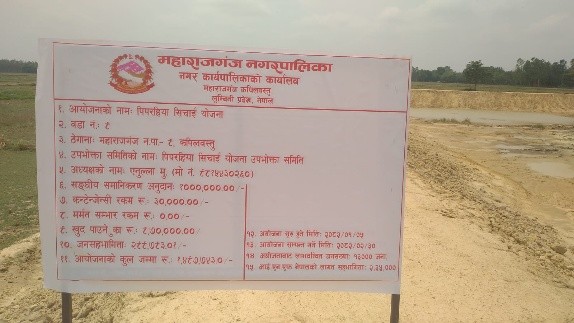
For Nazir, the change has been signifiant. “Now we don’t worry about irrigation,” he says with relief. “We get water when we need it. Even when fields nearby are dry, ours receive regular irrigation.”
The collection centre will soon be reinforced with iron outlets to improve water regulation and protect the structure, ensuring long-term use. The municipality has committed to maintaining the facility as a permanent climate adaptation measure for the community.
For families like Nazir’s, this centre is more than infrastructure it is a lifeline. This is how INF is collaborating with local communities and government to create practical, low-cost solutions to climate change. As Nazir puts it, “Hundreds of people like me can now say no to an uncertain future of misery and yes to relief, resilience, and hope for a better life.”
*Name changed for anonymity